
 |
 |
 |
 |
 |
 |
 |
In 1939 Nazis rallied in Chicago to make Germany great again
Four thousand supporters gave the Nazi salute in a northwest-side park.
By Jeff Nichols
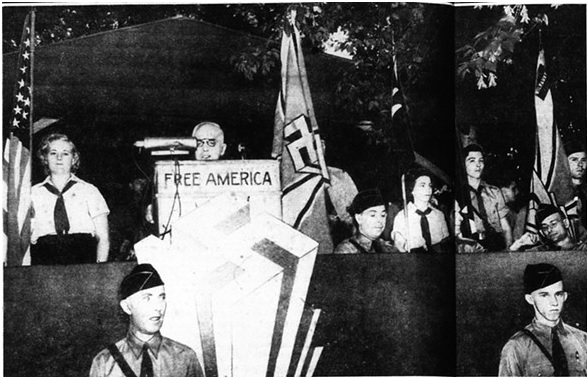
American Bund leader Fritz Kuhn promises to make Germany and America great once more at a rally at Irving Park and Narragansett on June 18, 1939
CHICAGO DAILY TIMES
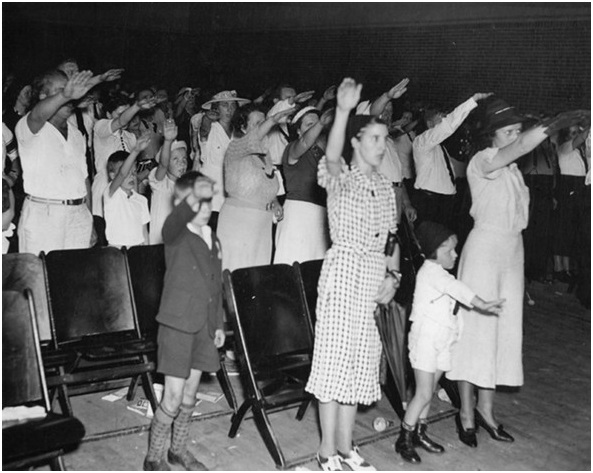
It might seem absolutely inconceivable that there was a time in Chicago in which a fascist rally would attract thousands of people. But on June 18, 1939, the American flag and Nazi swastika banner flew side by side in what is now known as Merrimac Park.
Chicago newspapers estimated that between 4,000 and 8,000 assembled to support the German-American Bund, an organization whose stated mission was to "defend the Constitution, Flag, and Institutions of these United States of America." But as at other Bund gatherings, those that spoke showed nothing but contempt for American democracy. There was remarkably little ideological difference between the German-American Bund and the Nazi Party in Germany.
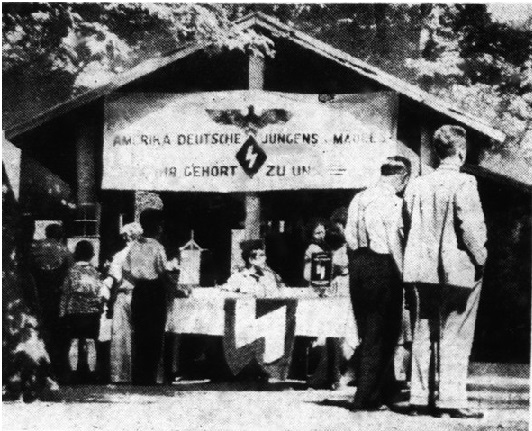
A Bund recruiting tent on display during the June 18, 1939, rally
CHICAGO DAILY TIMES
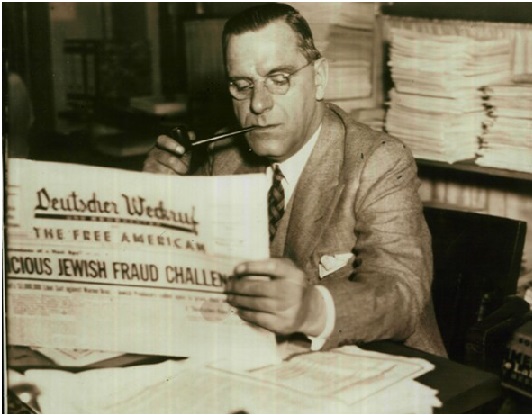
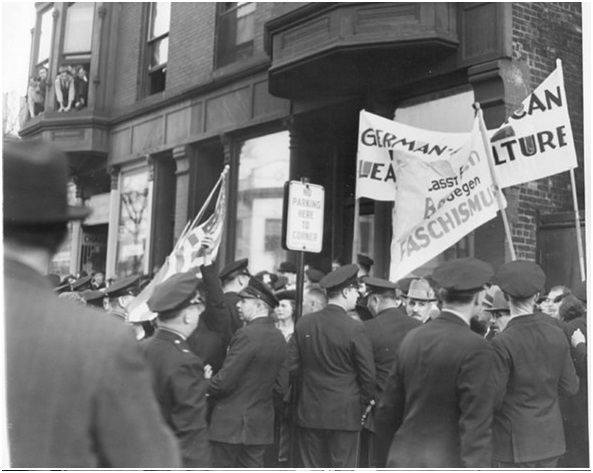
Several hundred men and boys dressed in uniforms resembling those worn by Nazi storm troopers. Vendors sold beer, brats, and anti-Semitic literature. At least 100 police officers were kept on reserve in case of a riot, but the only disturbance of the day involved a handful of brownshirts who had confiscated the film of a newspaper photographer. The crowd would be safe from hearing from the groups it wished to eliminate from American society. Praising Adolf Hitler, Bund leader Fritz Kuhn appealed to the enthusiastic crowd to carry on his organization's "patriotic fight" to "free America." The event, which began with "The Star-Spangled Banner," ended with a Hitler salute and German hymns.
A Bund recruiting tent on display during the June 18, 1939, rally
CHICAGO DAILY TIMES
Several hundred men and boys dressed in uniforms resembling those worn by Nazi storm troopers. Vendors sold beer, brats, and anti-Semitic literature. At least 100 police officers were kept on reserve in case of a riot, but the only disturbance of the day involved a handful of brownshirts who had confiscated the film of a newspaper photographer. The crowd would be safe from hearing from the groups it wished to eliminate from American society. Praising Adolf Hitler, Bund leader Fritz Kuhn appealed to the enthusiastic crowd to carry on his organization's "patriotic fight" to "free America." The event, which began with "The Star-Spangled Banner," ended with a Hitler salute and German hymns.
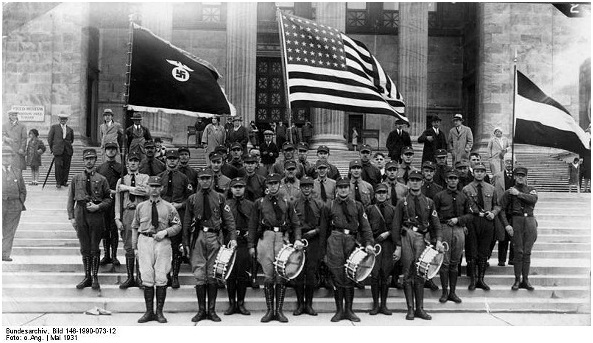
Although new members took an oath that affirmed the Führerprinzip—the principle that the leader's word was above any written law—the Friends of New Germany was such a fractious mess that the German government, which had long collaborated with the group, ordered German nationals to resign their memberships in October 1935. In March 1936, the German-American Bund was formed. Kuhn, a Detroit chemist and naturalized American citizen who had proven himself a skilled organizer, was elevated as its leader. The new American führer was able to bring stability to the project of spreading Nazism in the United States, projecting the illusion that it was a rapidly expanding mass movement. "His bombast, propensity for exaggeration, and lies were part of his technique," Diamond writes.
The Bund did not go unchallenged in Chicago. In September 1937, theChicago Daily Times ran a ten-part series on the group. Two German-American brothers, James and John Metcalfe, went undercover and quickly rose in its ranks. Backed by the Bund's own malignant propaganda, they characterized the organization as an "alien army" that considered not only Jews and Communists as its enemies, but also the Catholic Church and New Deal liberals. One Bundist told John Metcalfe that he had witnessed "men dumped out of windows and killed" in Germany. "The day will come over here when Jews get the same treatment on the street they get in Germany," he said. The exposé intensified pressure for the federal government to investigate the group, particularly its ties to the German government.
Although new members took an oath that affirmed the Führerprinzip—the principle that the leader's word was above any written law—the Friends of New Germany was such a fractious mess that the German government, which had long collaborated with the group, ordered German nationals to resign their memberships in October 1935. In March 1936, the German-American Bund was formed. Kuhn, a Detroit chemist and naturalized American citizen who had proven himself a skilled organizer, was elevated as its leader. The new American führer was able to bring stability to the project of spreading Nazism in the United States, projecting the illusion that it was a rapidly expanding mass movement. "His bombast, propensity for exaggeration, and lies were part of his technique," Diamond writes.
The Bund did not go unchallenged in Chicago. In September 1937, theChicago Daily Times ran a ten-part series on the group. Two German-American brothers, James and John Metcalfe, went undercover and quickly rose in its ranks. Backed by the Bund's own malignant propaganda, they characterized the organization as an "alien army" that considered not only Jews and Communists as its enemies, but also the Catholic Church and New Deal liberals. One Bundist told John Metcalfe that he had witnessed "men dumped out of windows and killed" in Germany. "The day will come over here when Jews get the same treatment on the street they get in Germany," he said. The exposé intensified pressure for the federal government to investigate the group, particularly its ties to the German government.
Although new members took an oath that affirmed the Führerprinzip—the principle that the leader's word was above any written law—the Friends of New Germany was such a fractious mess that the German government, which had long collaborated with the group, ordered German nationals to resign their memberships in October 1935. In March 1936, the German-American Bund was formed. Kuhn, a Detroit chemist and naturalized American citizen who had proven himself a skilled organizer, was elevated as its leader. The new American führer was able to bring stability to the project of spreading Nazism in the United States, projecting the illusion that it was a rapidly expanding mass movement. "His bombast, propensity for exaggeration, and lies were part of his technique," Diamond writes.
The Bund did not go unchallenged in Chicago. In September 1937, theChicago Daily Times ran a ten-part series on the group. Two German-American brothers, James and John Metcalfe, went undercover and quickly rose in its ranks. Backed by the Bund's own malignant propaganda, they characterized the organization as an "alien army" that considered not only Jews and Communists as its enemies, but also the Catholic Church and New Deal liberals. One Bundist told John Metcalfe that he had witnessed "men dumped out of windows and killed" in Germany. "The day will come over here when Jews get the same treatment on the street they get in Germany," he said. The exposé intensified pressure for the federal government to investigate the group, particularly its ties to the German government.
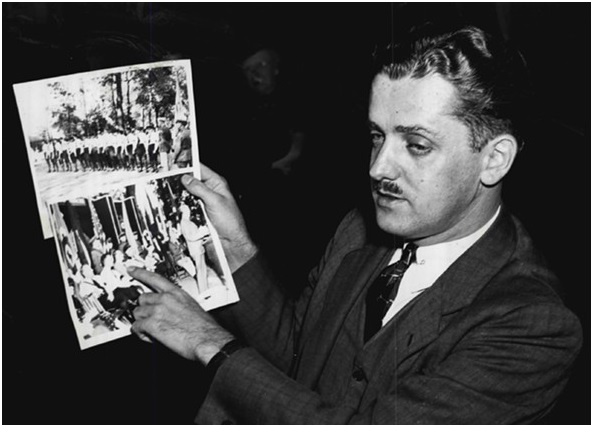
Chicago Daily Times reporter and former FBI agent James C. Metcalfe showing congressional investigators a photo of Kuhn meeting with German consular officials in Chicago.
SUN-TIMES
The rally in June 1939 would not be the last mass meeting of Nazis in Chicago, although these extremists often came from mixed ethnic and cultural backgrounds disdained by the Bund. George Lincoln Rockwell, leader of the American Nazi Party, spoke in Marquette Park in August 1966 to an audience that may have been as large as 3,000. Although the National Socialist Party marches of 1977 still loom large in the public consciousness, there were only perhaps 30 marchers in total.
It would be nice to think that our city would never have to experience such a spectacle again, but you shouldn't hold your breath.
|
|
 |
 |
 |
 |
 |
 |
 |
 |
 |
 |
 |
 |
 |
 |
 |
 |
 |
 |
 |
 |
 |
 |
 |
 |
 |
 |
 |
 |
 |
 |
 |
 |
 |
 |
 |
 |
 |
 |
 |
 |
 |
 |
 |
 |
 |
 |
 |
 |
 |
 |
 |
 |
 |
 |
 |
